

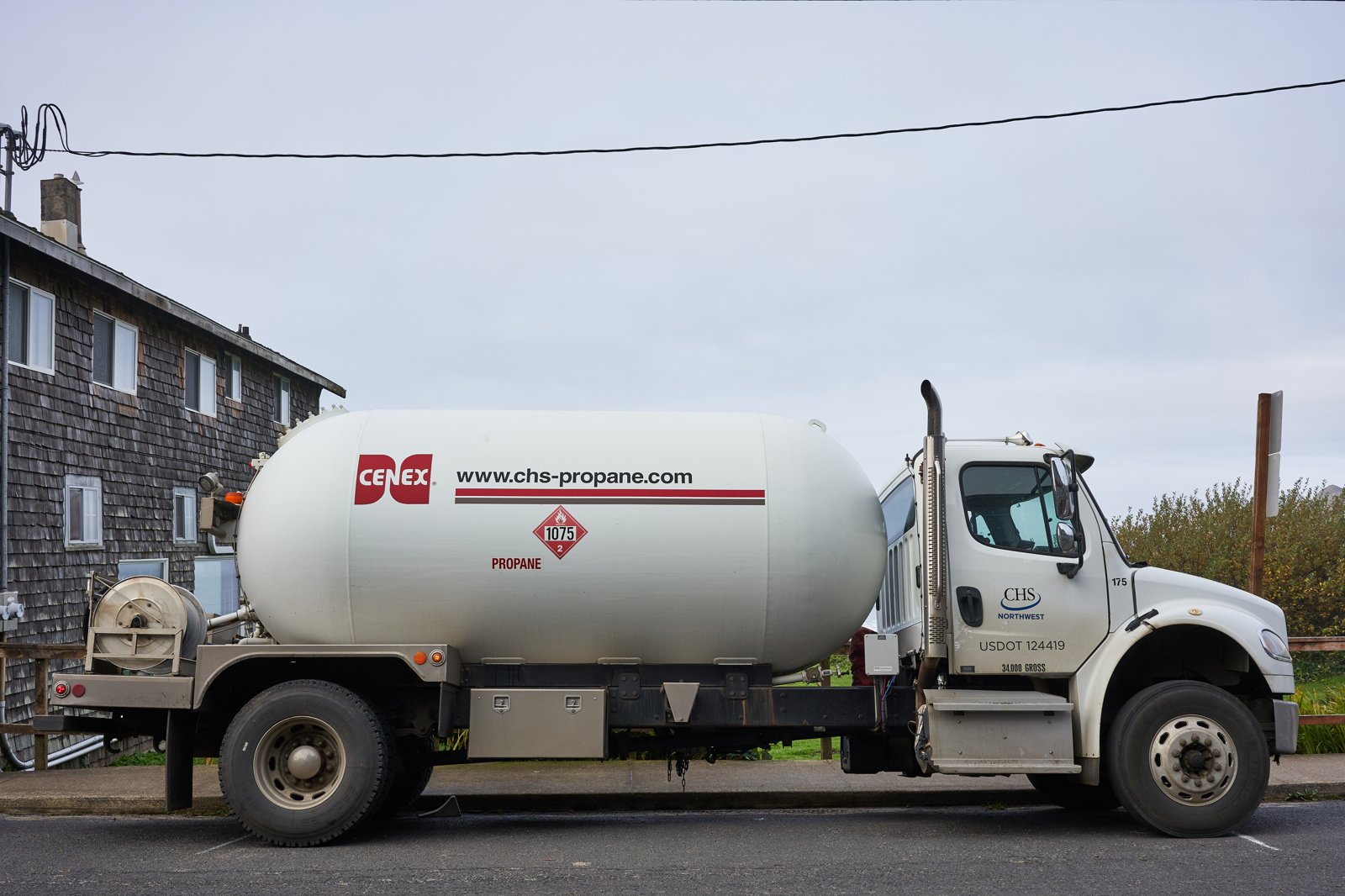
DOT Inspection on Propane Trailer & Tank Testing
A propane trailer is a pressure vessel on wheels, and the rules that govern it are stricter than the ones for a flatbed. The cargo tank itself has its own federal test and inspection schedule on top of the annual vehicle inspection every commercial unit needs. If you operate an MC-331 propane bobtail or transport, a dot inspection on propane trailer equipment is not optional — it is what keeps your tank legal to fill and haul. Ames Hydraulics handles propane trailer inspection and the related repair work for operators across Central Iowa.
What the Rules Actually Require
Propane cargo tanks are regulated under PHMSA’s hazardous materials rules in 49 CFR. The periodic test and inspection requirements live in 49 CFR 180.407, and for an MC-331 tank in propane service the schedule generally runs like this:
- External visual inspection — every year. A walk-around of the tank, valves, fittings, and mounting looking for damage, corrosion, and leaks.
- Leakage test — every year. Under 49 CFR 180.407, a leakage test checks for leaks at fittings, valves, and welds — it is not the same thing as a pressure test.
- Internal visual inspection — every 5 years.
- Pressure test — every 5 years.
- Thickness test — every 2 years where the rule requires it.
There is a well-known exception: certain MC-331 tanks of 3,500 gallons water capacity or less in dedicated propane service, built of the right steel, qualify for extended internal-visual and pressure-test intervals out to 10 years. The exact schedule for your tank depends on its specification, size, and history, so the first step in any dot inspection on propane trailer work is reading the data plate and the tank’s records. We do not guess at intervals — the regulation sets them, and we go by the regulation.
One thing to be clear about: the inspections and tests that requalify a propane cargo tank have to be done by inspectors and facilities that meet the qualification requirements in the federal rules. We will tell you straight which parts of the work we perform in-house and which require a registered tester, so your tank stays compliant and so does its paperwork.
Keep the Records Straight
The schedule is only half the job — the other half is the paperwork. PHMSA wants the test and inspection history kept on file, and an owner who cannot produce records for a tank can find it pulled from service even if the tank itself is sound. When you bring a unit in for a dot inspection on propane trailer, we document what was checked, what was found, and what was done, so your file matches your tank. If you are taking over a used propane unit and do not know where it stands, start with the data plate and the records, and we will help you read both.
Where We Fit In
Most propane operators do not have one problem — they have a tank that is due, a valve that weeps, a mounting that has worked loose, and a unit that also needs its annual vehicle inspection. Ames Hydraulics is a hydraulic, welding, and mechanical shop, so a dot inspection on propane trailer equipment usually comes bundled with the repair work the inspection turns up: replacing worn valves and fittings, repairing mounting and frame issues, and fixing the things that would otherwise fail the unit. We tell you up front what we find, what it costs, and what has to happen before the tank can go back into service.
Inspection and Repair in One Stop
The reason operators bring propane work to a full equipment shop is the same reason any hauler does: downtime. A tank that is pulled for inspection is already off the road, so that is the moment to fix the things that would strand it next month — the seeping valve, the cracked mount, the worn fitting. Doing the dot inspection on propane trailer work and the repair in one stop keeps a unit from making two trips to the shop. We have the welding and fabrication capability to repair mounting and frame issues correctly, and the mechanical side to handle the valves and fittings, so the tank comes back ready to fill instead of ready for another appointment.
The annual periodic vehicle inspection that every commercial unit needs is covered on our DOT inspection page, and the broader tank repair work — on fuel, product, and cargo tanks — is on our tank trailer and fuel tank repair page. For a propane unit, those three pieces often happen together.
Bring Your Propane Trailer to Ames Hydraulics
If your propane tank is coming due, or you just want a straight answer on where your unit stands, call the shop that works on this equipment every day. For a dot inspection on propane trailer equipment, tank testing questions, or the repairs that go with them, call or text Ames Hydraulics at 515-292-2599, or bring it to 210 Freel Dr, Ames, IA 50010, Monday through Friday, 7AM–5PM. We also offer free pickup and delivery within 60 miles for operators in Central Iowa.

Written by Josiah Ragsdale
Owner, Ames Hydraulics — Ames, Iowa
Josiah owns and operates Ames Hydraulics. He has worked on hydraulic and heavy equipment since he was 18, and every hydraulic cylinder his shop rebuilds is pressure tested before it ships back to the customer. More about Josiah →
Got something broken? Call or text 515-292-2599