

A hydraulic cylinder that will not hold — one that drifts down, settles under load, or sags after you raise it — is one of the most common hydraulic complaints we hear, and one of the most dangerous to ignore. If your hydraulic cylinder won’t hold, here is what is usually going on and how it gets fixed.
Why a Cylinder Drifts Down
When a raised load slowly settles on its own, oil is escaping from the side of the piston that is holding it up — and there are only a few places it can go. Either the seals inside the cylinder are letting oil bypass the piston, or a valve in the circuit is leaking the oil back to tank. Telling those two apart is the key to fixing it right instead of guessing.
Worn Piston Seals
The most common cause is worn or damaged piston seals. The piston seal is what keeps oil on the working side of the cylinder; when it wears, oil slips past the piston and the rod creeps in or out under load. A cylinder that drifts with the control valve in neutral, especially an older one, has usually worn its seals. The fix is a reseal — and a pressure test afterward to prove it holds.
A Scored Rod or Barrel
Seals do not wear out on their own — usually something helped them. A scored or pitted rod or a scored barrel will tear up new seals quickly, so if the cylinder will not hold, we check the rod and barrel too. Replacing seals without addressing a scored surface just buys you a few weeks before it drifts again.
A Leaking Control Valve
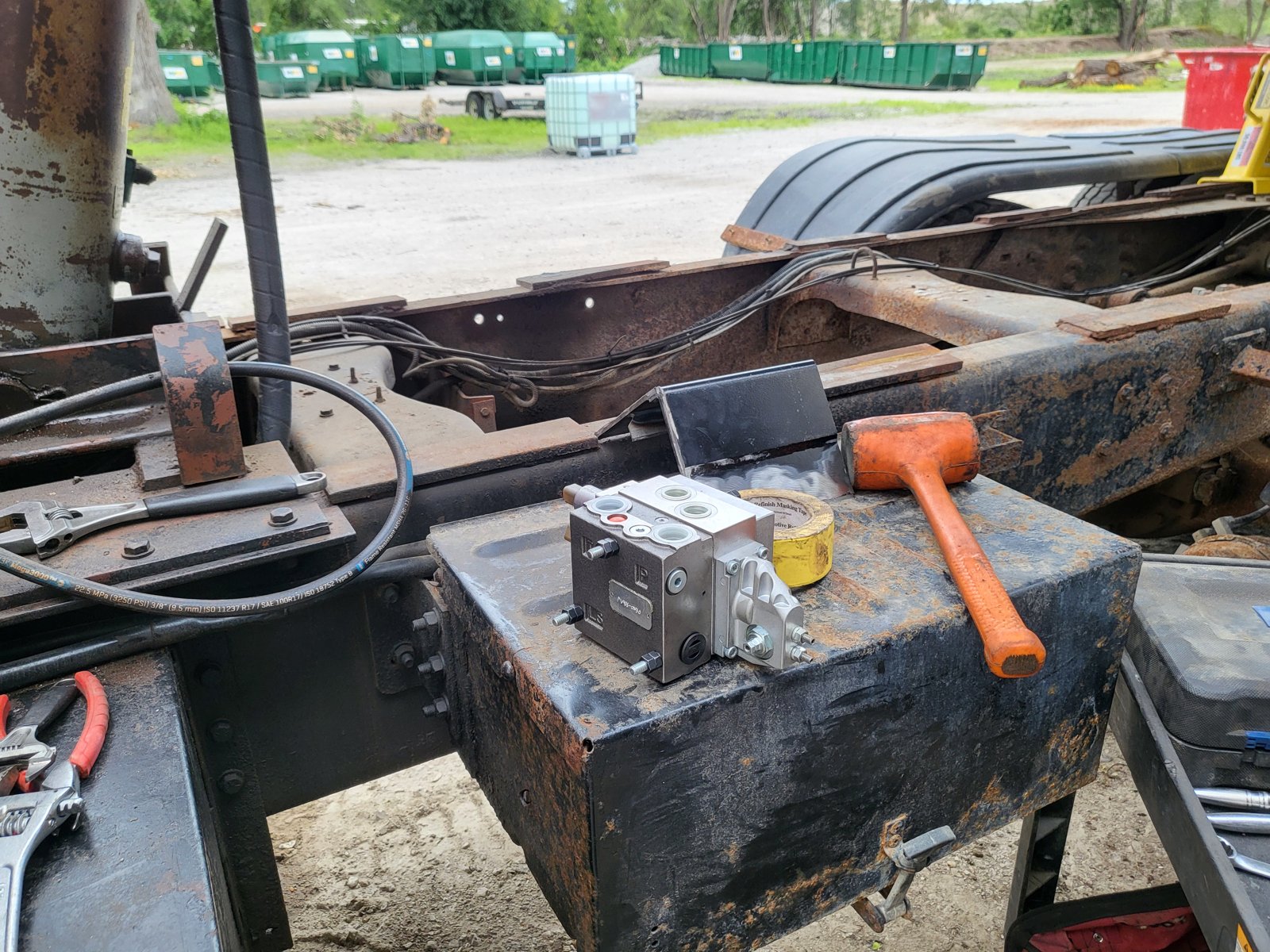
Sometimes the cylinder is fine and the valve is the problem. A control valve or holding valve that leaks internally lets the oil drain back to tank, and the load settles even though the seals are good. This is why we test the circuit instead of just reaching for a seal kit — plenty of cylinders get rebuilt when the real fix was a valve.
Why You Cannot Ignore It
A bed, bucket, or implement that settles on its own is a safety hazard, plain and simple. People are killed every year by equipment that dropped while they were under it. If your hydraulic cylinder won’t hold, treat it as a now problem, not a someday problem — especially on a dump bed or a lift.
How We Diagnose It
We check whether the drift happens with the valve centered, test pressures across the circuit, and isolate the cylinder from the valve to see which one is bleeding down. That tells us whether you need a reseal, a rod or barrel repair, or a valve fix — before we tear anything apart.
Single-Acting vs. Double-Acting Cylinders
How a cylinder holds depends on its design. A double-acting cylinder is held in both directions by oil and seals, so a worn piston seal lets it drift. A single-acting cylinder (like many dump hoists) relies on a held column of oil and the control valve. Knowing which you have helps pin down why the hydraulic cylinder won’t hold — and whether the seal or the valve is the culprit.
Can You Fix It Yourself?
Seal kits are available, and a handy operator can reseal a simple cylinder. The catch is that without inspecting the rod and barrel for the wear that killed the old seals — and without pressure testing the result — a DIY reseal often drifts again within weeks. If your hydraulic cylinder won’t hold after a reseal, the rod or barrel is usually the real problem.
How Long Does a Rebuild Take?
A straightforward reseal is usually a quick turnaround once we have the cylinder. A job that needs a rod or barrel can take longer, but because we stock chrome rod, we are not waiting weeks on parts the way a dealer often is. We will give you a real timeline up front.
The Fix That Lasts
Whatever the cause, the repair ends the same way: a cylinder that holds under load, proven on a pressure test before it goes back on the machine. If your hydraulic cylinder won’t hold, see our hydraulic repair and cylinder rebuild services, or call or text Ames Hydraulics at 515-292-2599.

Written by Josiah Ragsdale
Owner, Ames Hydraulics — Ames, Iowa
Josiah owns and operates Ames Hydraulics. He has worked on hydraulic and heavy equipment since he was 18, and every hydraulic cylinder his shop rebuilds is pressure tested before it ships back to the customer. More about Josiah →
Got something broken? Call or text 515-292-2599