

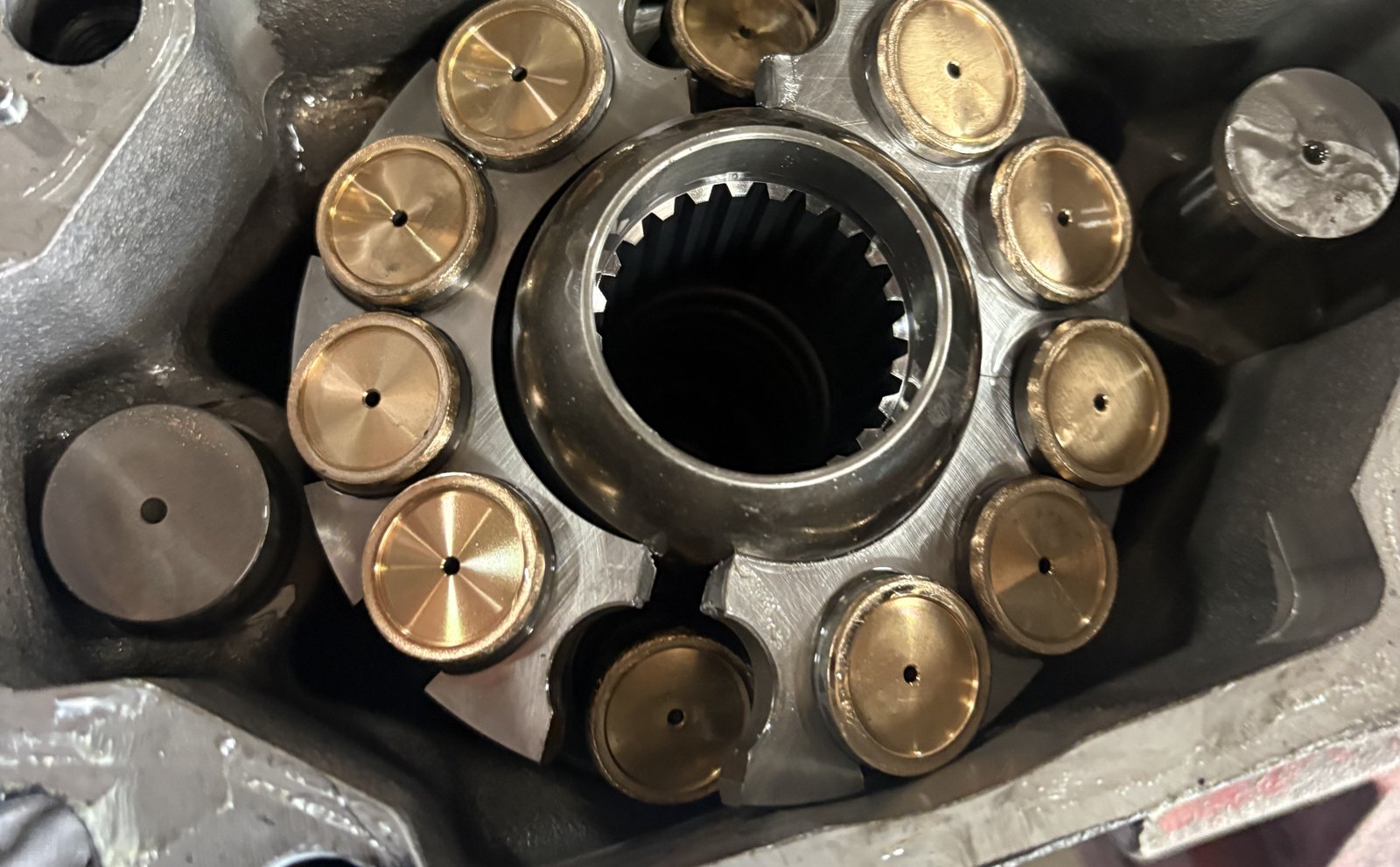
A hydraulic pump rarely dies all at once — it warns you first. Catching a failing hydraulic pump early can save the rest of your system, because a pump that comes apart sends metal into your valves, cylinders, and motors. Here are the signs your hydraulic pump is on its way out.
1. A Whining or Growling Noise
A healthy pump runs with a steady hum. A pump that whines, growls, or knocks is telling you something — often that it is starving for oil (a suction problem) or that the internals are wearing. Cavitation, where the pump pulls vapor instead of oil, makes a distinctive rattling whine and destroys a pump fast if you keep running it.
2. Slow, Weak Operation
If the equipment has gotten sluggish — the loader lifts slower, the bed takes longer, everything feels weak under load — the pump may be bypassing internally. A worn pump still turns but no longer moves its rated volume, so the work slows down. It usually gets gradually worse, which is why people live with it until it quits.
3. Overheating
A worn pump runs hot because the oil slipping past the internals turns into heat instead of work. If the system is overheating by mid-day when it never used to, a failing pump is a prime suspect. Heat then breaks down the oil and the seals, which accelerates the failure.
4. Milky or Foamy Oil
Oil that looks milky has water in it; oil that is foamy has air in it. Both are bad for a pump and both point to a problem — a leak pulling air on the suction side, or water contamination. Aerated oil cannot hold pressure and chews up the pump.
5. Metal in the Oil or Filter
When you find metal flake or glitter in the reservoir or the filter, the pump (or a motor) is coming apart inside. This is the most serious sign — not only is the pump failing, but that debris is circulating through your whole system and damaging everything downstream. Stop running it.
6. External Leaks
Oil leaking from the pump shaft seal or housing means seals are failing and pressure is escaping. A leak is both a symptom and a cause — it lowers the oil level, which starves the pump and makes everything worse.
Why Catching It Early Matters
A failing hydraulic pump caught early is a rebuild. A failing pump run until it grenades is a rebuild plus contaminated oil, damaged valves, and scored cylinders — a far bigger bill. The moment a pump starts whining, slowing, or overheating, it is worth getting looked at.
Gear, Vane, and Piston Pumps Fail Differently
The type of pump shapes how a failing hydraulic pump shows itself. Gear pumps — the common workhorse — wear at the gears and housing and gradually lose volume. Vane pumps wear at the vanes and ring. Piston pumps, used for high pressure, can fail at the pistons, shoes, or swash plate, sometimes more suddenly. Knowing the type helps us know where to look.
What Causes a Pump to Fail
A failing hydraulic pump usually has a reason behind it: contaminated oil grinding the internals, running the reservoir low and pulling air, heat breaking down the oil, or simply high hours. Fixing the pump without fixing the cause — the leak, the dirty oil, the bad filter — just sets up the next failure. We address both.
Rebuild or Replace?
Many pumps are worth rebuilding for a fraction of replacement cost, especially larger or harder-to-source units. Some small or badly grenaded pumps are cheaper to replace. We will tell you honestly which makes sense for your failing hydraulic pump rather than defaulting to the more expensive option.
Get Your Pump Checked
If you are seeing these signs, see our hydraulic pump and motor repair page or call or text Ames Hydraulics at 515-292-2599. We rebuild pumps and test them before they go back to work.

Written by Josiah Ragsdale
Owner, Ames Hydraulics — Ames, Iowa
Josiah owns and operates Ames Hydraulics. He has worked on hydraulic and heavy equipment since he was 18, and every hydraulic cylinder his shop rebuilds is pressure tested before it ships back to the customer. More about Josiah →
Got something broken? Call or text 515-292-2599