

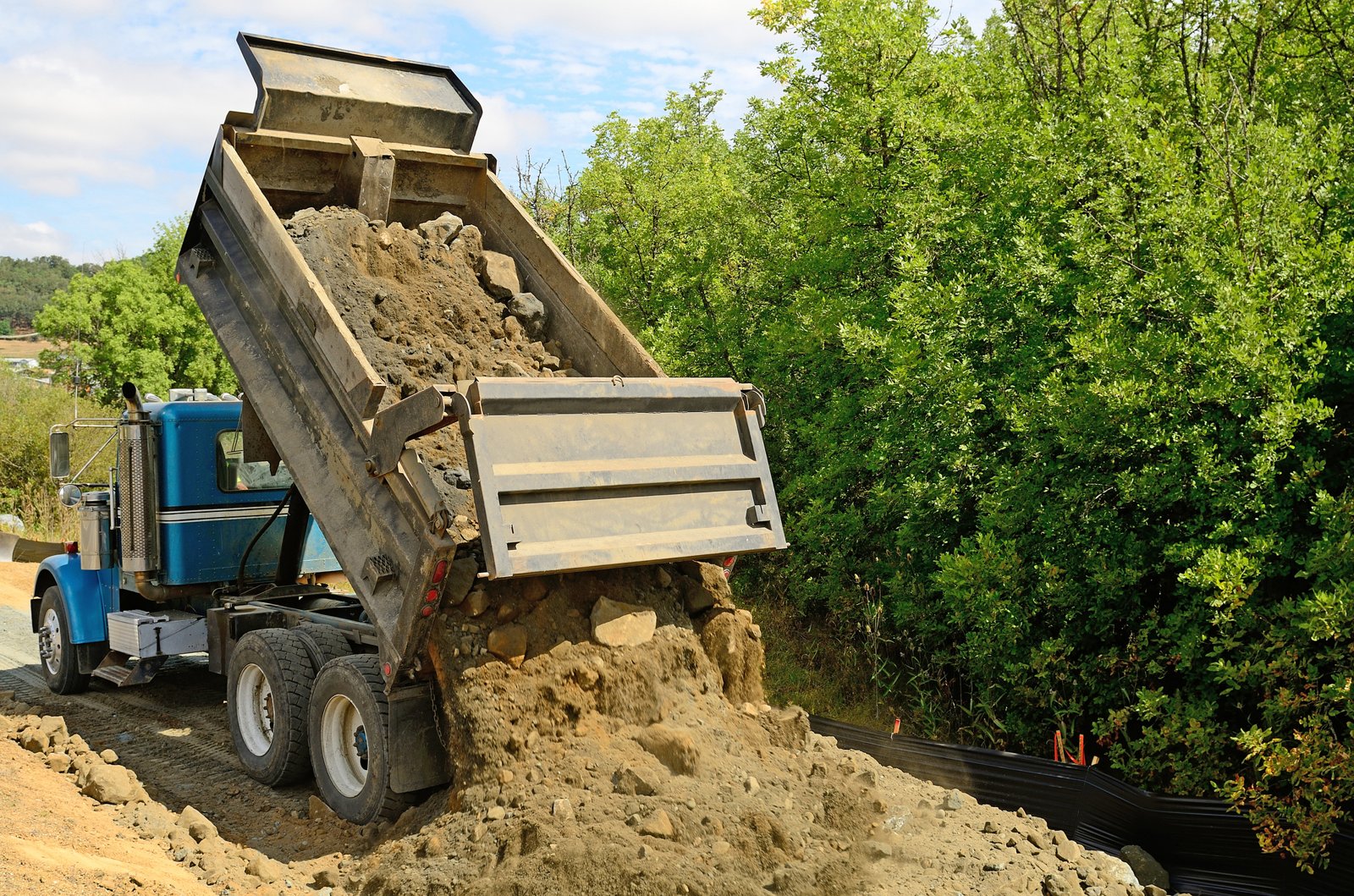
A dump bed that will not raise, comes up slow, or will not stay up turns a working truck into a parked one. When your dump truck hoist won’t lift, the problem is in the hydraulics — and it is usually one of a few things. Here is how to narrow it down.
Start Simple: Oil and PTO
Before anything else, check the obvious. Is the hydraulic oil at the right level? Is the PTO engaging and turning the pump? A dump system that does nothing at all often comes back to a PTO that is not engaging, a low reservoir, or a pump that is not turning — not the cylinder. Rule those out first.
The Bed Lifts Slow or Weak
If the bed raises but slowly, or struggles with a full load, the pump is the prime suspect. A worn pump no longer moves the volume it should, so the lift drags. A clogged filter, low oil, or a PTO turning at the wrong speed can cause the same thing. This is a flow problem, and it usually means a pump that needs rebuilding or replacing.
The Bed Won’t Hold — It Settles
A bed that raises fine but then drifts down on its own is leaking oil internally — either the hoist cylinder’s seals are bypassing or the control valve is leaking back to tank. This is the dangerous one: a bed that settles can crush anyone working under it. It needs to be fixed now, and we test to find whether it is the cylinder or the valve.
The Bed Does Nothing at All
No movement at all points to no oil flow reaching the cylinder — a disengaged PTO, a dead pump, a control valve that will not shift, or a badly low reservoir. We trace the system from the PTO forward to find where the flow stops.
The Hoist Cylinder
The hoist cylinder does the heavy lifting, and on most dump trucks it is a multi-stage telescopic cylinder. When it blows a seal it leaks down; when a stage is scored it can stick or leak. We rebuild telescopic hoist cylinders — reseal, repair the stages, and pressure test — so the bed lifts and holds.
Pumps, PTOs, and Valves
Behind the cylinder, the PTO drives the pump, the pump moves the oil, and the control valve directs it. A slow bed is often a tired pump; a bed that drops is often the valve; a bed that does nothing is often the PTO. We repair all of it so the whole system works together.
Don’t Run a Bed That Won’t Hold
It bears repeating: if the bed will not hold up, do not put yourself or anyone else under it, and do not keep loading it. Get the hoist fixed. The repair is a lot cheaper than the alternative.
Telescopic vs. Scissor Hoists
Most dump trucks use either a front-mount telescopic hoist or an under-body scissor hoist, and when a dump truck hoist won’t lift the failure point differs a little between them. Telescopic cylinders have multiple stages that can score or stick; scissor hoists put more load through the linkage and a single large cylinder. We rebuild both, including the multi-stage telescopic cylinders that are common on dump trucks.
Safety First — Always
It cannot be said too often: if a dump truck hoist won’t lift or will not hold a raised bed, never get under that bed without it safely blocked. Beds that settle have killed people. Get the hoist repaired so it holds, and use a safety prop any time someone has to be under a raised bed.
Preventing Hoist Problems
A lot of the reasons a dump truck hoist won’t lift come down to neglect — old, dirty oil, a low reservoir, or a PTO and pump run hard without service. Keeping clean oil in the system, fixing small leaks before they drain the tank, and not overloading the bed all extend the life of the hoist and pump.
Get It Lifting Again
See our dump truck hoist and hydraulic repair page, or call or text Ames Hydraulics at 515-292-2599. Within 60 miles of Ames we will come get the truck.

Written by Josiah Ragsdale
Owner, Ames Hydraulics — Ames, Iowa
Josiah owns and operates Ames Hydraulics. He has worked on hydraulic and heavy equipment since he was 18, and every hydraulic cylinder his shop rebuilds is pressure tested before it ships back to the customer. More about Josiah →
Got something broken? Call or text 515-292-2599