

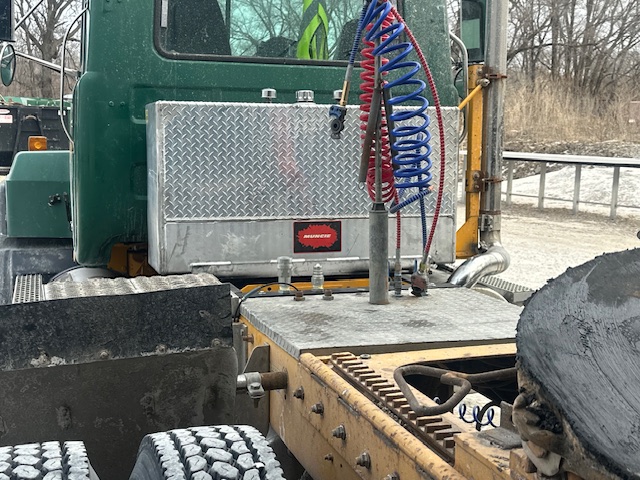
2-Line vs. 3-Line Wet Kits: Which Do You Need?
When you’re setting up hydraulics on a truck, one decision shapes the whole job: do you run a two-line system or a three-line system? Both will raise a dump body. The difference is in how they handle the oil, how cool they stay, and how long the pump lasts under hard use. If you’re weighing a 2 line wet kit for semi work against a three-line setup, here’s how we break it down at Ames Hydraulics in Ames, Iowa.
How the Two Systems Differ
A two-line system runs exactly two hoses: a pressure line that sends oil out to the trailer cylinder, and a return line that brings it back. A three-line system keeps those two and adds a dedicated case-drain line. That third line gives the oil a clean path back to the reservoir, which is the whole point of going to three.
That sounds like a small change, but it drives almost every real-world difference between the two. With a 2 line wet kit for semi applications, oil has to flow both directions through the same hardware, and that limits a few things you’ll care about.
Cooling
Heat is what kills hydraulic pumps. On a three-line setup, oil keeps circulating back to the reservoir even while you’re holding, so it sheds heat and stays cooler. On a two-line setup, the most common way to cook a pump is leaving it engaged in neutral, where the oil has nowhere to go and temperature climbs fast. If you do a lot of cycles in a day, that cooling advantage adds up.
Filtration
This is the one a lot of people miss. A filter is built to flow oil in one direction. In a two-line system the oil runs both ways through the same lines, so you can’t put a proper return filter in the circuit. A three-line system has a dedicated return line, which means you can run a real filter and keep the oil clean. Clean oil means a pump and valves that last. So a 2 line wet kit for semi use trades away filtration for simplicity.
Cycle Speed
The dedicated return on a three-line system cuts restriction on the way back, so trailers tend to lower faster and the whole cycle moves quicker. On a light-duty setup that’s barely noticeable. On a hauler dumping all day, faster cycles mean more loads.
Cost and Simplicity
Here’s where the two-line earns its place. A 2 line wet kit for semi setups uses fewer hoses, fewer fittings, and less labor to plumb, so it costs less up front and there’s less to maintain. For an operator who raises and lowers a dump body now and then and doesn’t sit in neutral with the pump engaged, two lines can be plenty. The component makers like Muncie and Parker build solid two-line pumps for exactly that kind of duty.
What Wears Out, and Why It Matters
Most of the trouble we see on truck hydraulics traces back to two things: heat and dirty oil. A pump that runs hot breaks down the oil faster, cooks seals, and loses efficiency. Oil that never gets filtered carries grit that scores the pump, the valve, and the cylinder over time. The three-line design attacks both of those at once, the dedicated return keeps the oil moving and cooling, and it gives you a spot to mount a filter that actually does its job. That’s the real reason the third line exists. It isn’t about lifting harder; it’s about lifting the same load for years without cooking the pump.
That said, a two-line system isn’t a corner-cut. It’s a deliberate, simpler design for lighter duty. The trade is real but it goes both ways: fewer parts means fewer places to leak and less to service. Plenty of trailers have run two-line setups for a long time without trouble, because the owner matched the system to the work and didn’t abuse it.
Which One Should You Run?
Here’s the straight version we give customers:
- Go two-line if your use is light and occasional, you want the lower up-front cost, and you’re disciplined about not leaving the pump engaged in neutral. A 2 line wet kit for semi work like seasonal dumping or an occasional load is a reasonable, honest choice.
- Go three-line if you cycle hard and often, you want the oil filtered, and you’d rather pay a little more now for cooler running and longer pump life. Many manufacturers lean toward three-line for most applications, and they back it up with longer pump warranties on three-line systems.
There’s no single right answer for everybody. It comes down to how hard you run and how long you want the system to last. Tell us what you haul and how often you dump, and we’ll point you to the setup that fits instead of selling you more than you need.
Let Ames Hydraulics Spec It With You
Whether a 2 line wet kit for semi use or a three-line system is right for your truck, we’ll match the pump, tank, and plumbing to your transmission and your workload, and give you a price up front. We serve haulers and fleets all over Central Iowa from our shop at 210 Freel Dr, Ames, IA 50010, Monday through Friday, 7AM–5PM, with free pickup and delivery within 60 miles. Call or text 515-292-2599. Ready to buy? Browse our wet kits for sale, or learn more about a professional wet kit installation.

Written by Josiah Ragsdale
Owner, Ames Hydraulics — Ames, Iowa
Josiah owns and operates Ames Hydraulics. He has worked on hydraulic and heavy equipment since he was 18, and every hydraulic cylinder his shop rebuilds is pressure tested before it ships back to the customer. More about Josiah →
Got something broken? Call or text 515-292-2599