

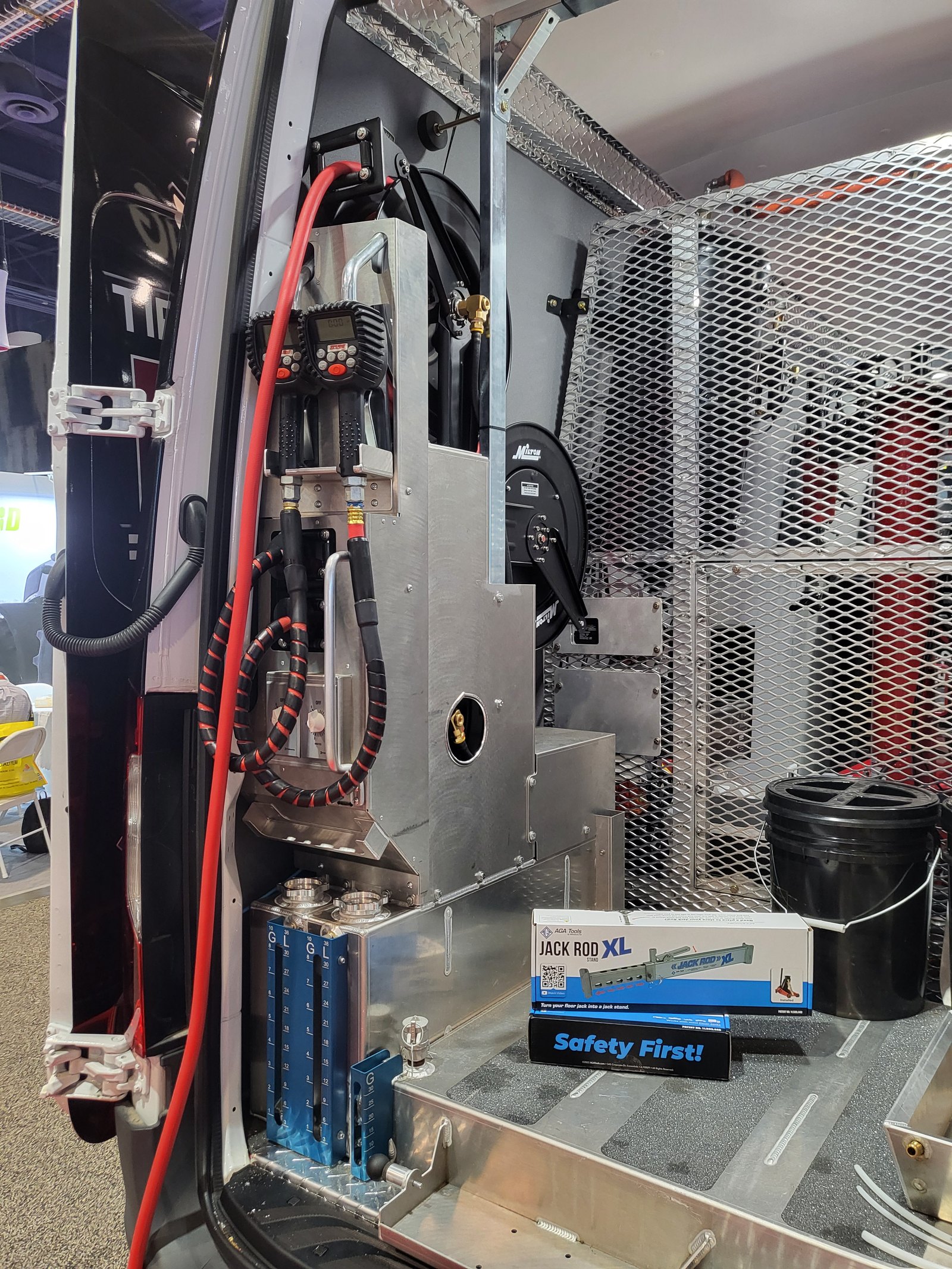
A service truck is a shop that drives — and the difference between a truck that carries tools and a truck that does work is the systems built into it: compressed air, oil and grease delivery, fuel transfer, power, and storage that survives the road. Ames Hydraulics builds and repairs service truck and lube truck setups in central Iowa — we’ve built lube vans from bare cargo shells into complete mobile service units (two of them are in our gallery), and the same capability upfits pickups, flatbeds, and box trucks for whatever your fleet does in the field.
Air on the Truck: the System That Runs Everything Else
A service truck air compressor is the heart of the rig — impact tools, tire service, blow-down, and pneumatic pumps all hang off it — and matching the compressor to the workload is where builds go right or wrong. Reciprocating units with a receiver tank handle intermittent impact work economically; rotary screw units deliver the continuous air that tire work and sandblasting demand; hydraulic-driven and engine-driven options fit where electrical capacity runs out. We size it honestly against the tools you actually run, mount it where the weight belongs, plumb it with a real filter-regulator-lubricator setup, and route the reels so the hose reaches the work instead of almost reaching it.
Lube Systems: Oil Where the Equipment Is
For fleets and farms that service equipment in the field, a lube truck or lube skid pays for itself in saved trips: fresh oil tanks with pneumatic or electric pumps, metered delivery reels, used-oil evacuation into a waste tank, grease systems, and coolant and hydraulic oil delivery — the whole oil-change workflow, mounted on a truck, trailer, or skid. We build them to the scale you need: a two-product skid that slides into a pickup, a van packaged like the ones we’ve delivered, or a full multi-product body on a chassis. Tanks baffled and vented right, pumps matched to oil viscosity in an Iowa January, reels that rewind, and plumbing labeled so a new hire can’t put used oil in the fresh tank.
The Rest of the Rig
- Hose reels — air, oil, grease, fuel, and water, mounted and plumbed to actually get used
- Fuel transfer — auxiliary tanks and pumps, done to the rules
- Storage — custom boxes and drawer systems built around the systems, not competing with them
- Cranes and lifting — mounts engineered into the bed structure, hydraulics plumbed by the hydraulic shop
- Power and lighting — inverters, work lights, and wiring loomed like it has to last
- Repair of existing rigs — tired compressors, dead pumps, leaking reels, and the rewire the last guy left behind
Built by the People Who Fix Them
Our advantage is circular: we repair service trucks and mobile equipment for a living, so we know exactly which upfit choices fail — the unbaffled tank that splits, the reel mounted where the door eats it, the compressor bolted over the fuel tank with no service access. A lube truck or service rig built here is built around those lessons. Existing trucks get upgraded in stages if that’s what the budget wants — air this quarter, lube skid next — and every build is quoted in writing by system. Text photos of your truck and a list of what it needs to do to 515-292-2599. 210 Freel Dr, Ames — Monday through Friday, 7AM to 5PM.
The Fleet Math That Justifies the Build
A lube truck is bought with arithmetic, not enthusiasm, so here’s the arithmetic. Count the machines that get serviced in the field — tractors, combines, dozers, excavators, trucks — and what each service event costs today: the drive to town for oil, the second trip for the filter that was wrong, the machine downtime waiting, the tech’s hours spent hauling instead of wrenching. A fleet of fifteen machines serviced quarterly burns hundreds of hours a year on logistics that a properly built service rig collapses into single visits — fresh oil delivered metered, used oil evacuated, grease and coolant on the same stop. Most operations that run the numbers find the build pays back in 12–24 months, and everything after is margin. That’s also why the build should match the actual fleet: a two-product skid for a farm, a full multi-product lube truck for a contractor — sized from your machine list, not from a brochure.
Common Upfit Questions
Gas, hydraulic, or engine-driven compressor? Depends on duty cycle and what the truck already has — we size from your air tools’ actual CFM appetite, and honest sizing beats big sizing. Can you upfit the truck I already own? That’s most of the work we do — staged upgrades on existing trucks, air first, lube system second, storage as budget allows. What about DEF? DEF handling needs dedicated stainless or poly systems — it contaminates and corrodes anything else — and we build for it where the fleet demands it. Used lube skids — worth buying? Sometimes; bring it by before money changes hands and we’ll pressure-test the pumps and tell you what it needs the same way we’d inspect a used bale bed. Photos and a fleet list to 515-292-2599 starts the sizing conversation free.
Related Services

Written by Josiah Ragsdale
Owner, Ames Hydraulics — Ames, Iowa
Josiah owns and operates Ames Hydraulics. He has worked on hydraulic and heavy equipment since he was 18, and every hydraulic cylinder his shop rebuilds is pressure tested before it ships back to the customer. More about Josiah →
Got something broken? Call or text 515-292-2599