

Stainless Tank Repair Iowa — Fuel, Bulk & Food-Grade Tank Welding
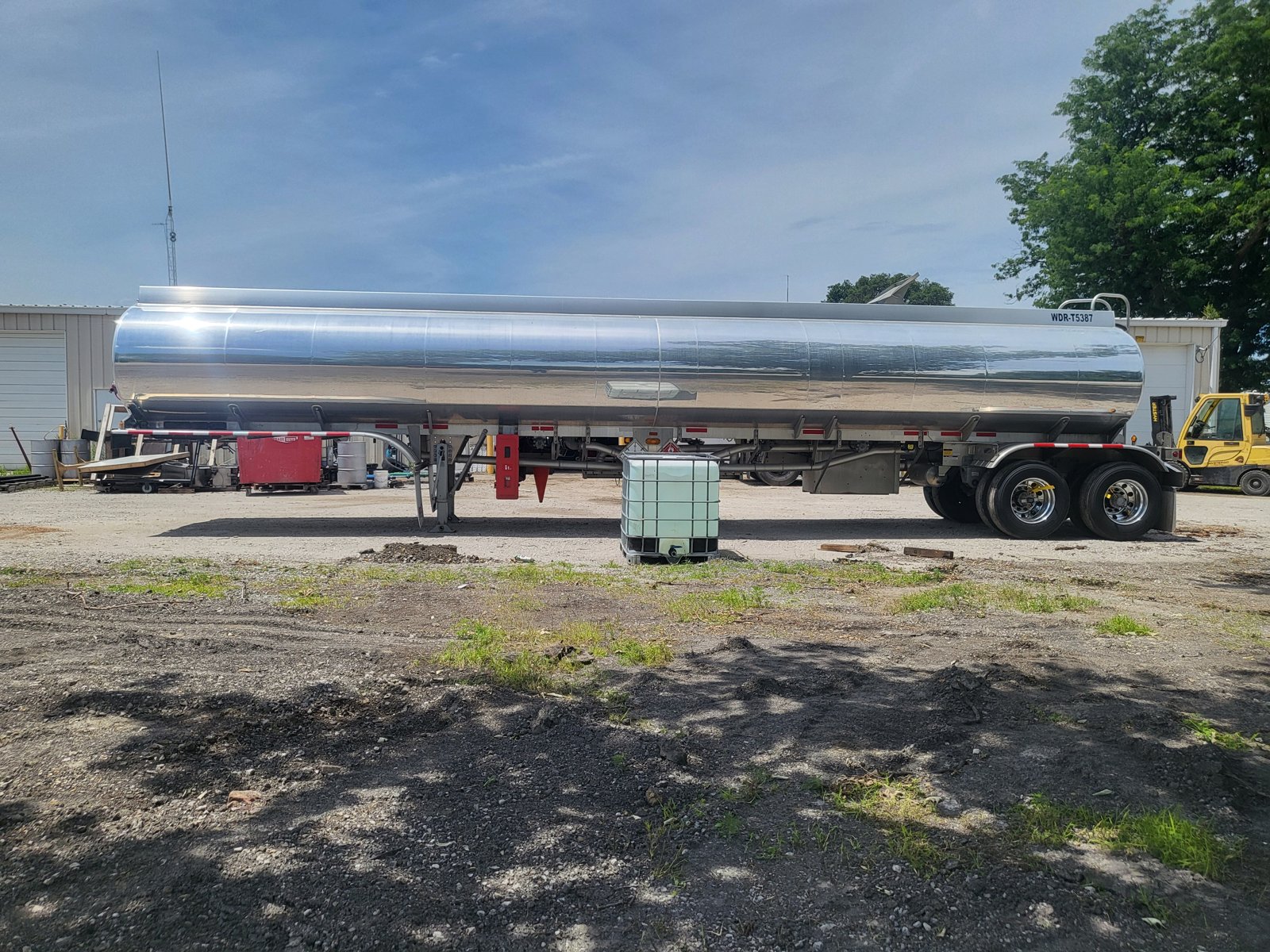
Stainless tank repair is a specialized welding category where the material demands are strict, the safety protocols matter, and the shop’s aluminum-and-stainless capability determines whether the job comes out right. At Ames Hydraulics we handle stainless tank repair on fuel tankers, bulk chemical tanks, food-grade dairy and beverage tanks, water and fire-service tanks, and industrial stainless vessels across Iowa. Casey’s General Store, along with other fleet operators, sends us stainless fuel tanker work regularly — the tank in our hero image is a Casey’s fuel tanker on our shop floor for weld repair.
Fuel Tanker Trailer Repair
Fuel tanker trailers on Iowa fleets take hard service — hundreds of daily coupling and uncoupling cycles, heavy load, and constant exposure to fuel and weather. Stainless tank repair on fuel tankers most commonly addresses stress-crack repair along frame-attachment weldments, dome-cover mounting flange repair, manway weld repair, and catwalk-and-rail structural weldments. Every fuel tanker repair requires a written tank-clean or nitrogen-purge sign-off from the customer before we strike an arc. That is not optional — welding on a tank that held fuel without proper purge is a real explosion hazard, and we don’t do it.
Bulk Chemical And Dry-Bulk Tank Repair
Bulk chemical tanks and dry-bulk trailers (grain, fertilizer, chemical dry material) come through our shop for stainless tank repair on saddle weldments, discharge-port weld repair, and structural frame welding. Chemical-tank repair has its own protocol depending on the material the tank held — we require material-safety-data documentation for the last product carried before we weld, and appropriate purging or neutralization protocol before any hot work. That safety discipline is part of what an approved-vendor tank repair shop brings that a generic weld shop doesn’t.
Food-Grade Dairy And Beverage Tank Repair
Food-grade stainless tank repair is a distinct sub-category. Sanitary weld requirements, correct filler for the tank material (typically 316L or similar food-grade stainless), and post-weld cleaning and passivation all matter for a food-grade fix. We handle sanitary weld work where our qualifications match the tank’s original certification — typically dairy transport tanks, beverage bulk tanks, and food-processing vessels within our shop’s certified-weld scope. Where a specific NSF or FDA re-certification is required after the repair, we help route to the right certifying inspector.
Water And Fire-Service Tank Repair
Municipal water tanks, fire-service tanks, and utility water carriers come through for stainless tank repair when tank walls crack or when structural weldments fail. Water tank repair is generally less protocol-heavy than fuel or chemical work — no explosive residue — but the weld quality still matters because a leaking water tank in service is a real operational problem. We handle municipal and utility water-tank work on the same shop schedule as our other tank repair.
Leak Testing After Weld Repair
Every stainless tank repair we do gets pressure-tested or hydrostatically leak-tested before it goes back into service. On fuel and chemical tanks, that’s a nitrogen or air leak test at typical operating pressure. On food-grade tanks, it’s hydrostatic testing plus visual inspection and passivation verification. On atmospheric tanks (open-top water tanks and similar), it’s a visual and dye-penetrant inspection where appropriate. We don’t send a repaired tank back to the customer without verifying the repair holds — the alternative is a tank that leaks in service and creates a much bigger problem.
Fleet And Corporate Customer Scheduling
Iowa fleet operators running fuel tanker fleets or bulk-material trailers get priority scheduling on stainless tank repair when we can, because tanker downtime is expensive. Casey’s General Store, along with regional bulk-material haulers and food-service distribution operations, uses our shop for stainless work on a repeat basis. If your operation has a fleet of stainless equipment that needs periodic weld and structural service, contact us about a fleet-service window rather than emergency-only repair.
Cost And Turnaround
Typical stainless tank repair pricing: single stress-crack weld with doubler plate runs 3–6 shop hours plus material; structural weldment repair varies 4–10 hours; leak testing on completion is included in the base repair cost. Fuel or chemical tank purge documentation and process is the customer’s responsibility — we won’t strike an arc without it. Written estimate before any work over three shop hours. Turnaround typically 3–7 shop days on standard tank work.
What Makes A Good Stainless Weld Shop
The value of a specialized stainless tank repair shop over a general fabrication shop shows up in three places: filler selection, surface prep, and post-weld treatment. Stainless welding demands the right filler for the parent material (typically 308L, 309L, or 316L depending on tank alloy) — wrong filler and the weld either cracks in service or corrodes at an accelerated rate. Surface prep must be spotless because contamination in a stainless weld shows up as porosity, discoloration, or reduced corrosion resistance. Post-weld treatment on food-grade tanks requires passivation to restore corrosion resistance to the weld area.
Every stainless tank repair at our shop follows these disciplines because we do enough tank work to know the failure modes when they’re skipped. Casey’s General Store, food-service distribution operations, and Iowa bulk-material fleets sending us repeat tanker work is the evidence that this discipline delivers durable repairs.

Written by Josiah Ragsdale
Owner, Ames Hydraulics — Ames, Iowa
Josiah owns and operates Ames Hydraulics. He has worked on hydraulic and heavy equipment since he was 18, and every hydraulic cylinder his shop rebuilds is pressure tested before it ships back to the customer. More about Josiah →
Got something broken? Call or text 515-292-2599