

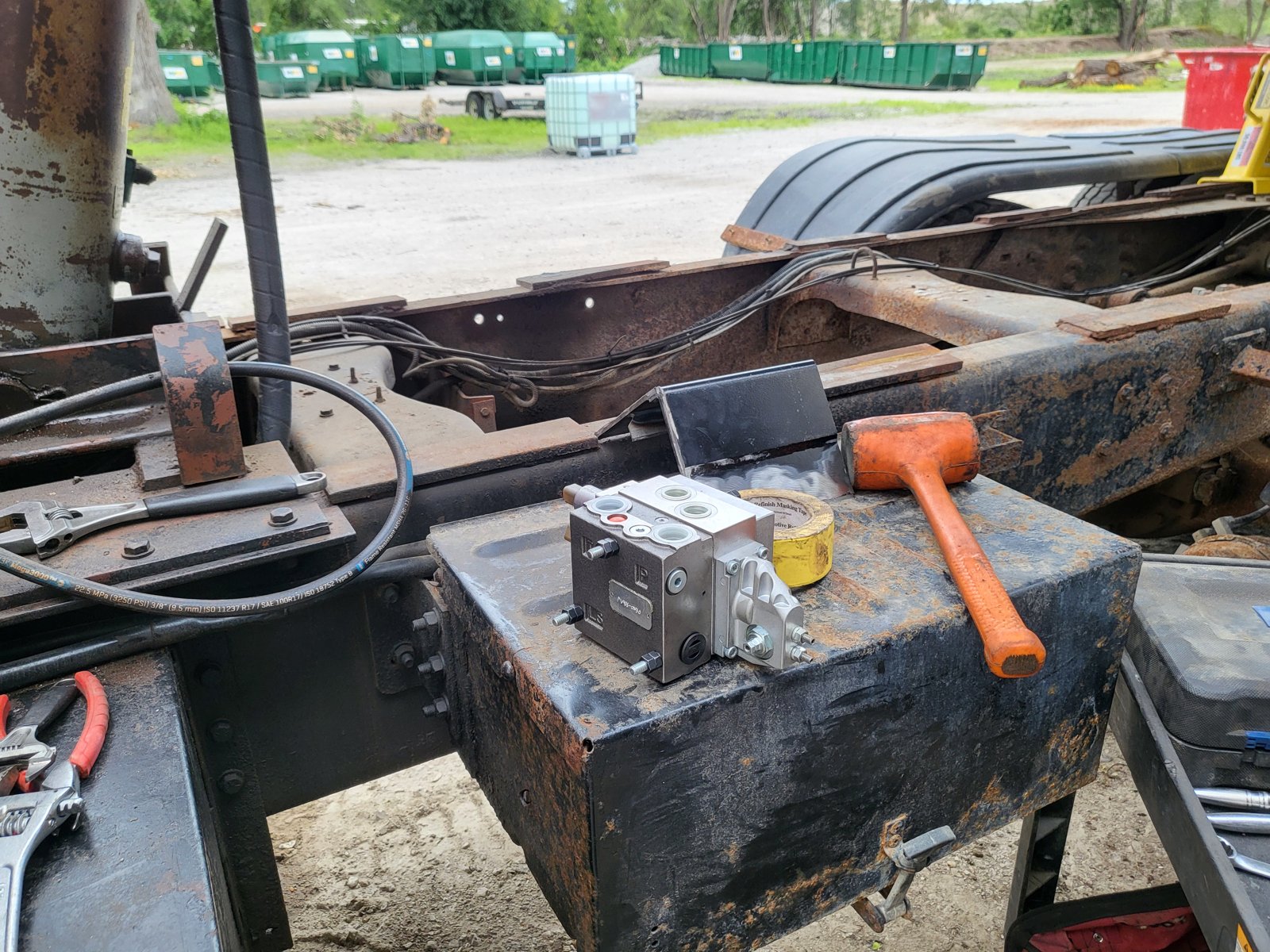
Hydraulic Valve Repair Iowa — Directional, Proportional, Servo, Control
Hydraulic valve repair is a specialty within hydraulic service where the wear is subtle, the diagnostics are precise, and the impact on the machine’s function is often disproportionate to the cost of the valve itself. At Ames Hydraulics we handle hydraulic valve repair across the valve categories that show up on Iowa industrial, ag, and vocational equipment — directional valves (Parker D-series, Rexroth 4WE, HydraForce cartridge), proportional valves, servo valves (Moog and equivalent), pilot-operated check valves, load-holding valves, pressure-reducing valves, and flow-control valves.
Symptoms Of A Failing Hydraulic Valve
Diagnosis is where hydraulic valve repair often begins. Common failure symptoms: system function that drifts when the machine is idle (internal spool leakage), one function that runs slower than another under equivalent control input (spool wear or debris), pressure that spikes at unexpected points in the cycle (relief valve issue), and interaction between functions where operating one function unexpectedly affects another (internal spool crossover). Every one of these symptoms points to a specific valve category, and correct diagnosis is what separates a real repair from an educated guess.
Directional Valve Service
Directional valves are the most common category of hydraulic valve repair in the field. Internal spool wear causes function drift, and detent mechanism wear causes valve position to shift under vibration. We rebuild directional valves with new spool seals, replace wear-worn spools with OEM or aftermarket equivalents, inspect and clean the valve body, and pressure-test the rebuilt valve at working PSI on the bench before returning to service.
Proportional And Servo Valve Repair
Proportional and servo valves are precision components where hydraulic valve repair requires cleaner conditions and more precise assembly than standard directional-valve service. Contamination on the spool or body during rebuild ruins the valve, so we clean-room the assembly area and use appropriate filtration on any fluid contacting the components during test. Servo valves especially are precision-machined to tolerances that ordinary shop conditions can compromise; where a specific manufacturer-authorized rebuild is required (Moog Class-D or similar), we route to the manufacturer’s authorized specialist rather than compromise the valve’s performance.
Cartridge Valves And Manifold Systems
Modern industrial hydraulic systems often use cartridge valves in a manifold assembly rather than a stand-alone valve stack. Cartridge hydraulic valve repair involves removing individual cartridges from the manifold, rebuilding or replacing each cartridge as needed, cleaning the manifold body, and verifying seal integrity when the cartridges are reinstalled. Common cartridge brands we service: HydraForce, Sun Hydraulics, Parker, and various cartridge-configured manifolds from ag and industrial equipment OEMs.
Load-Holding And Safety Valves
Load-holding valves are safety-critical on any equipment where hydraulic pressure must hold a load at height — boom trucks, aerial devices, presses, and lift equipment. When a load-holding valve fails, the load can drift or drop unexpectedly. Hydraulic valve repair on load-holding valves at our shop includes extended pressure-hold testing at working PSI — not just a quick pressure test, but a hold-and-verify test that proves the valve will safely hold the load in service. That safety discipline is what separates a real repair from a guess.
Test Bench And Verification
Every rebuilt valve at our shop gets bench-tested at working PSI before it returns to service. Test procedures depend on valve type — a directional valve gets function verification across all spool positions; a proportional valve gets response and linearity verification across command range; a load-holding valve gets extended pressure-hold verification. Documentation of the test result goes back to the customer with the rebuilt valve. That’s not marketing — that’s how we prove the repair holds before the machine goes back to work.
Preventive Programs Beat Emergency Repair
Facility maintenance managers who run preventive hydraulic programs across their plant equipment spend a small fraction of what reactive-only operators spend on hydraulics. Scheduled fluid analysis, cylinder rod inspection, hose replacement at end-of-service-life (not end-of-life), and pump case-drain flow monitoring all catch failures before they become unplanned downtime events. We help facility teams set up preventive schedules that fit their maintenance calendar and operational reality — not a canned program from a manufacturer sales brochure. The economics are consistent across industries: preventive service costs 20–40% of what reactive emergency repair costs when you include downtime and secondary damage. Plants that adopt real preventive programs see maintenance spend fall while equipment availability rises. That’s why we push preventive scheduling on customers who can benefit from it, even when it’s less shop revenue for us in a given month.
Documentation, Compliance, And Reporting
Public-entity plants, food processors, regulated industries, and audit-conscious operations need repair documentation matching their compliance archives. Every job at our shop generates: written estimate before major work, pressure-test records on hydraulic components, work-order documentation with parts and labor breakdown, and clean invoicing in customer-preferred formats. Facility supervisors file our repair records under equipment maintenance archives without translation. Where a specific reporting format is required for your finance system, ISO documentation, or FDA compliance archive, tell us the requirement and we’ll adjust our output. Documentation is included in the base repair cost — it’s not an upcharge.
Turnaround And Priority Scheduling
Standard turnaround on industrial hydraulic component work at our shop is typically 5–10 business days from drop-off to delivery. Rush turnaround (24–48 hours) is available at a premium when your downtime economics justify the additional cost. Commercial and industrial customers with critical downtime often use rush service on strategic components while sending less-critical items through standard scheduling. Multi-item batches from the same customer get combined scheduling for efficiency when the work fits together. We plan honestly around parts availability — some proprietary components have supplier lead times outside our control, and we quote realistic timelines up front rather than promise dates we can’t hit.
Contact And Onboarding
Iowa plant maintenance managers, facility engineers, and industrial procurement contacts — contact us at 515-292-2599 with your specific equipment need and site information. We handle new-vendor onboarding quickly (typically 1–3 business days) with standard W-9, insurance certificate, and any portal setup your finance system requires. Documentation is provided directly by email — we do not post those documents on the public web. Once you’re set up as an approved vendor, we’re available through your standard purchasing process for hydraulic, mechanical, and structural repair work at fair independent shop rates.

Written by Josiah Ragsdale
Owner, Ames Hydraulics — Ames, Iowa
Josiah owns and operates Ames Hydraulics. He has worked on hydraulic and heavy equipment since he was 18, and every hydraulic cylinder his shop rebuilds is pressure tested before it ships back to the customer. More about Josiah →
Got something broken? Call or text 515-292-2599