

A hydraulic system that will not build pressure leaves you with equipment that turns on but will not work — the bed will not lift, the loader will not curl, the implement will not move. When your hydraulic system won’t build pressure, the cause is almost always one of a short list of things. Here is where we look.
Start With the Oil
It sounds too simple, but low oil is one of the most common reasons a system will not build pressure. A reservoir that is low lets the pump pull air instead of oil, and an air-filled pump cannot make pressure. Check the level first, and look for the leak that got it there. Oil that is foamy or milky is a sign air or water is getting in, which causes the same problem.
A Worn-Out Pump
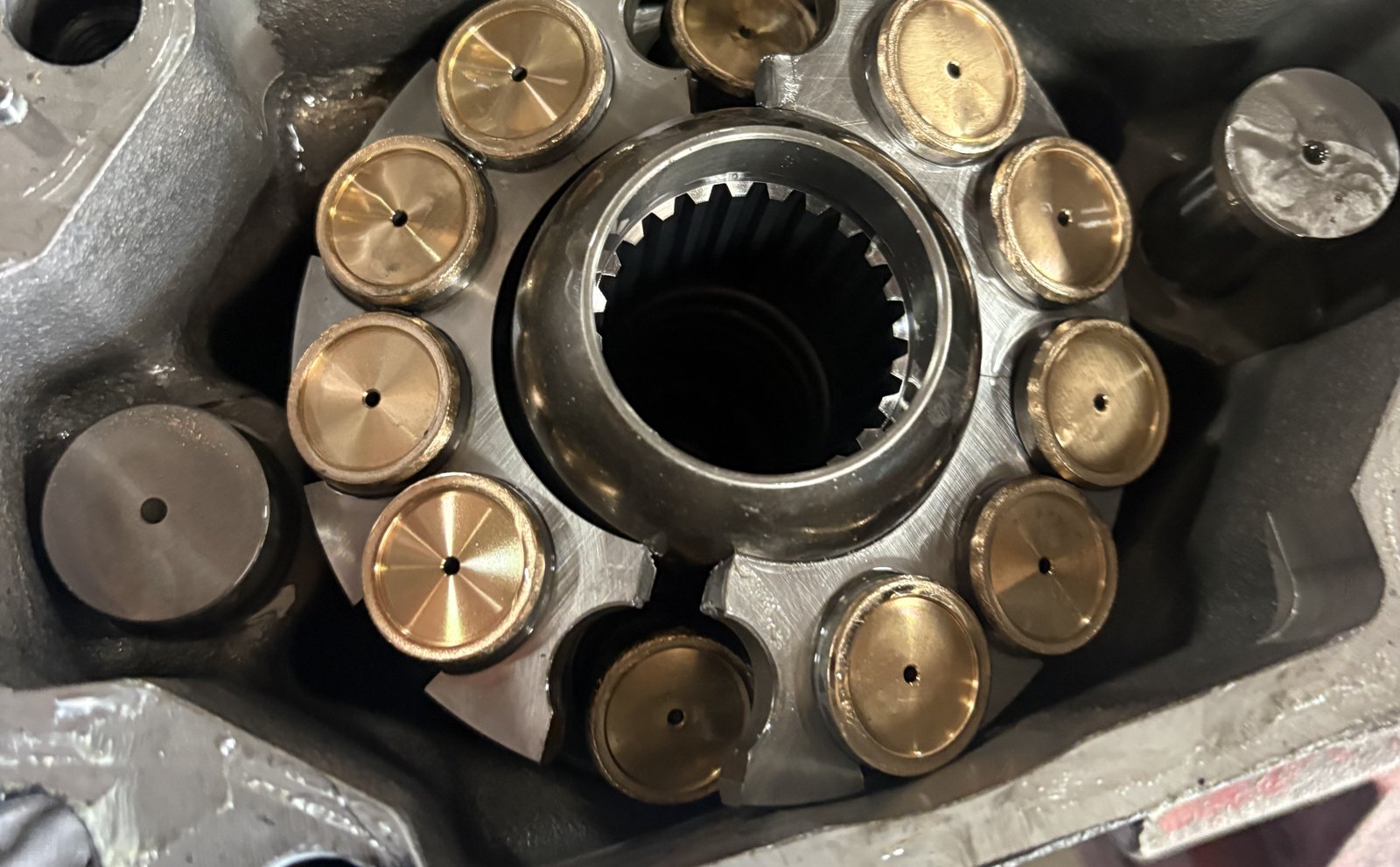
A pump that has worn internally will spin but no longer move the volume it used to — it bypasses inside itself instead of pushing oil to the system. This shows up as weak, slow operation that gets worse over time, often with a whine. A worn pump is a frequent reason a hydraulic system won’t build pressure, and it usually needs a rebuild or replacement.
A Stuck or Misadjusted Relief Valve
Every system has a relief valve that caps the maximum pressure. If it is stuck open or set too low, it dumps oil back to tank before the system ever builds pressure. A relief valve that has been adjusted by a previous owner, or one that has trash holding it open, will make a perfectly good pump act dead.
A Suction-Side Problem
The pump has to get a clean, full feed of oil to do its job. A clogged suction strainer, a collapsed suction hose, or a loose fitting on the inlet side starves the pump and kills pressure. These are easy to overlook because they are on the quiet side of the pump, but they are a classic cause.
A Bypassing Valve or Cylinder
Further downstream, a control valve that leaks internally or a cylinder with blown piston seals can bleed off pressure as fast as the pump builds it. The system may build some pressure but never reach full force. Isolating the circuit tells us whether the loss is at the valve or the cylinder.
Don’t Just Throw a Pump at It
The expensive mistake is assuming a no-pressure system means a bad pump and buying one before testing. Half the time the pump is fine and the problem is oil, a relief valve, or a suction restriction. We test flow and pressure through the system to find the actual cause first.
How We Track It Down
We put a gauge and a flow meter on the system and work through it — pump output, relief setting, valve, and cylinder — until the pressure loss shows itself. That is the difference between a fix that works the first time and a parts-swapping guessing game.
Electric, PTO, and Engine-Driven Systems
The same no-pressure logic applies whether the system is run by an electric power pack, a PTO-driven pump on a truck, or an engine-driven unit — but each has its own quirks. An electric unit might have a motor or coupling problem; a PTO system might not be turning the pump at the right speed; an engine unit might be down on engine RPM. When a hydraulic system won’t build pressure, we factor in how it is driven.
Contamination: The Silent Killer
Dirty oil is behind a huge share of hydraulic failures. Grit wears pumps and valves until they bypass, and a clogged filter starves the pump. If your hydraulic system won’t build pressure and the oil is dark, gritty, or has not been changed in a long time, contamination may have worn the pump — and any repair has to include cleaning up the oil and filtration, or it just fails again.
When to Stop Running It
Running a system hard when it will not build pressure can turn a small fix into a big one — a starved pump cavitates and destroys itself, and a relief valve dumping oil cooks the system. If it will not build pressure, shut it down and get it looked at before the damage spreads.
Get It Diagnosed Right
If your hydraulic system won’t build pressure, see our power unit and hydraulic repair services, or call or text Ames Hydraulics at 515-292-2599 and we will figure out what it actually needs.

Written by Josiah Ragsdale
Owner, Ames Hydraulics — Ames, Iowa
Josiah owns and operates Ames Hydraulics. He has worked on hydraulic and heavy equipment since he was 18, and every hydraulic cylinder his shop rebuilds is pressure tested before it ships back to the customer. More about Josiah →
Got something broken? Call or text 515-292-2599