

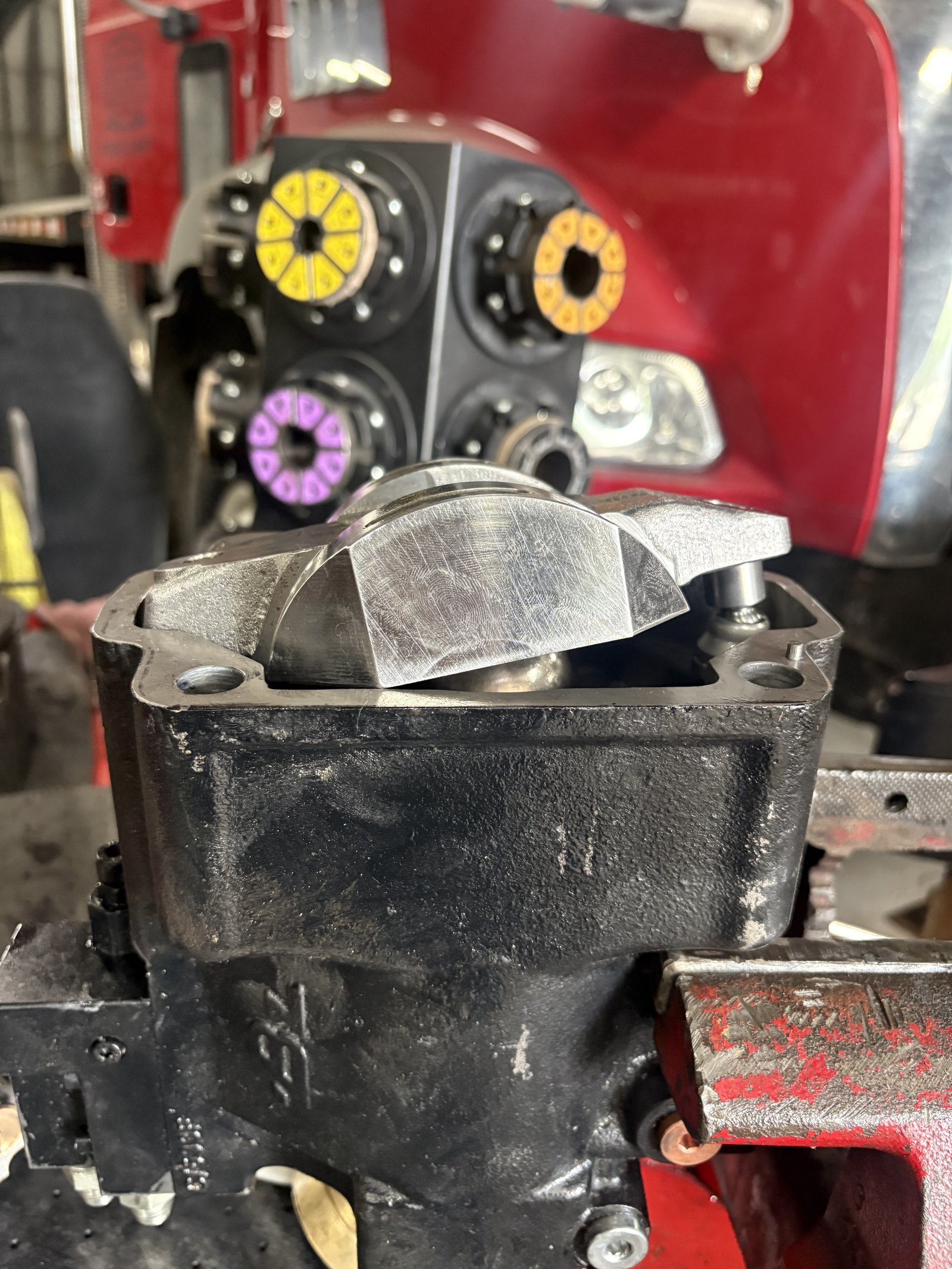
Half the “bad hydraulic motors” that get pulled off machines aren’t bad — the pump upstream is worn out, or a relief valve is bypassing, and the motor took the blame because it’s the part that stopped turning. Ames Hydraulics does hydraulic motor repair across central Iowa — orbit motors, gear motors, and piston motors off augers, mowers, drills, conveyors, sweepers, and industrial drives — and every job starts with an answer to the real question: is it the motor, or the system feeding it?
Motor or Pump? How to Tell
The symptoms overlap, but the pattern usually points one way. If everything on the machine is slow and weak, suspect the pump — one pump feeds many functions, and a motor only affects its own circuit. If one function is weak while the rest are strong, the motor (or its valve) is the suspect. A motor that turns freely by hand with no resistance is worn out internally. A motor that creeps when it should hold a load has internal leakage. And if the motor case is hot enough to sizzle while the rest of the system is warm, the motor is bypassing internally and turning your horsepower into heat. Proper hydraulic motor repair starts with flow and pressure readings on the actual circuit — ten minutes of testing that regularly saves customers a thousand-dollar mistake.
The Three Motor Families We Rebuild
- Orbit (gerotor) motors: the workhorses on augers, sweepers, and attachments — Char-Lynn / Eaton, Danfoss, White, Parker. Worn geroler sets, drive links, and shaft seals rebuilt.
- Gear motors: simple, tough, and common on ag and industrial drives — rebuilt with new bushings, seals, and wear plates.
- Piston motors: the high-power drives on hydrostatic systems and heavy equipment — rotating groups inspected, valve plates lapped, and bearings replaced. Wheel and track drive versions have their own page.
What Kills Hydraulic Motors
Motors rarely die of old age. They die of contamination — dirty oil scoring the internals; of case-pressure abuse — a blocked case drain blowing the shaft seal out of a piston motor; of overspeed — running a motor past its rating until the bearings let go; and of starvation — a starving pump feeding aerated oil downstream. Part of every hydraulic motor repair here is a look at which one killed yours, because a rebuilt motor installed into the same conditions dies the same death. If the oil is dirty, budget for a flush and filter; it’s the cheapest insurance in hydraulics.
Rebuild, Test, and Back to Work
Every motor we rebuild is torn down, measured against spec, rebuilt with the correct kit, and bench-tested — not just spun, but tested for internal leakage at pressure, because a motor can turn nicely and still be 30% worn. Typical hydraulic motor repair runs $250–$700 for orbit and gear motors and $800–$2,500 for piston motors, against new prices often two to four times that. Turnaround is 2–5 days depending on parts; common Char-Lynn and Danfoss kits are usually on the shelf. Obsolete motors are a specialty — when the OEM is gone, our machine shop can often save a motor no one else will touch.
Augers, Mowers, Conveyors, Drills, and Everything Else
The motors that cross our bench: grain auger and bin-sweep drives, batwing and flail mower spindles, post-hole and pier drills, conveyor and feed-mixer drives, street sweeper brooms, salt spreader spinners, and industrial machine drives of every description. If it spins under oil power, it’s in scope for hydraulic motor repair here. Free pickup within 60 miles of Ames for anything you can’t easily haul.
Get the Right Part Fixed
Before you buy a motor you might not need, text a photo of the motor tag and describe what the machine is doing to 515-292-2599. We’ll tell you the same day whether it reads like a motor, a pump, or a valve — and quote the fix in writing. 210 Freel Dr, Ames. Monday through Friday, 7AM to 5PM.
Case Drains: the Small Hose That Kills Big Motors
Piston motors have a case drain — a small hose that returns internal leakage oil back to tank at low pressure. When that hose gets kinked, plugged, or someone plumbs it into a pressurized return line, case pressure builds and blows the shaft seal out — and with the seal gone, the motor pumps its oil overboard and grinds itself to death. If you’ve replaced a shaft seal twice and it keeps blowing, stop replacing seals: the case drain is the problem. Checking case-drain routing and flow is a standard step in every piston-motor hydraulic motor repair we do, because the second rebuild is always avoidable.
Matching a Replacement When the Tag Is Gone
Half the motors that come in have no readable tag — paint, rust, or thirty years of grime. We identify them the mechanical way: spline count and shaft dimensions, port sizes and pattern, mounting flange bolt circle, and displacement measured from the internals. That’s usually enough to cross an orphan motor to a current Char-Lynn, Danfoss, or White equivalent — or to decide a rebuild of the original beats any available cross. Bring the motor in even if you know nothing about it; unidentifiable motors are a normal Tuesday in hydraulic motor repair.
Related Services

Written by Josiah Ragsdale
Owner, Ames Hydraulics — Ames, Iowa
Josiah owns and operates Ames Hydraulics. He has worked on hydraulic and heavy equipment since he was 18, and every hydraulic cylinder his shop rebuilds is pressure tested before it ships back to the customer. More about Josiah →
Got something broken? Call or text 515-292-2599