

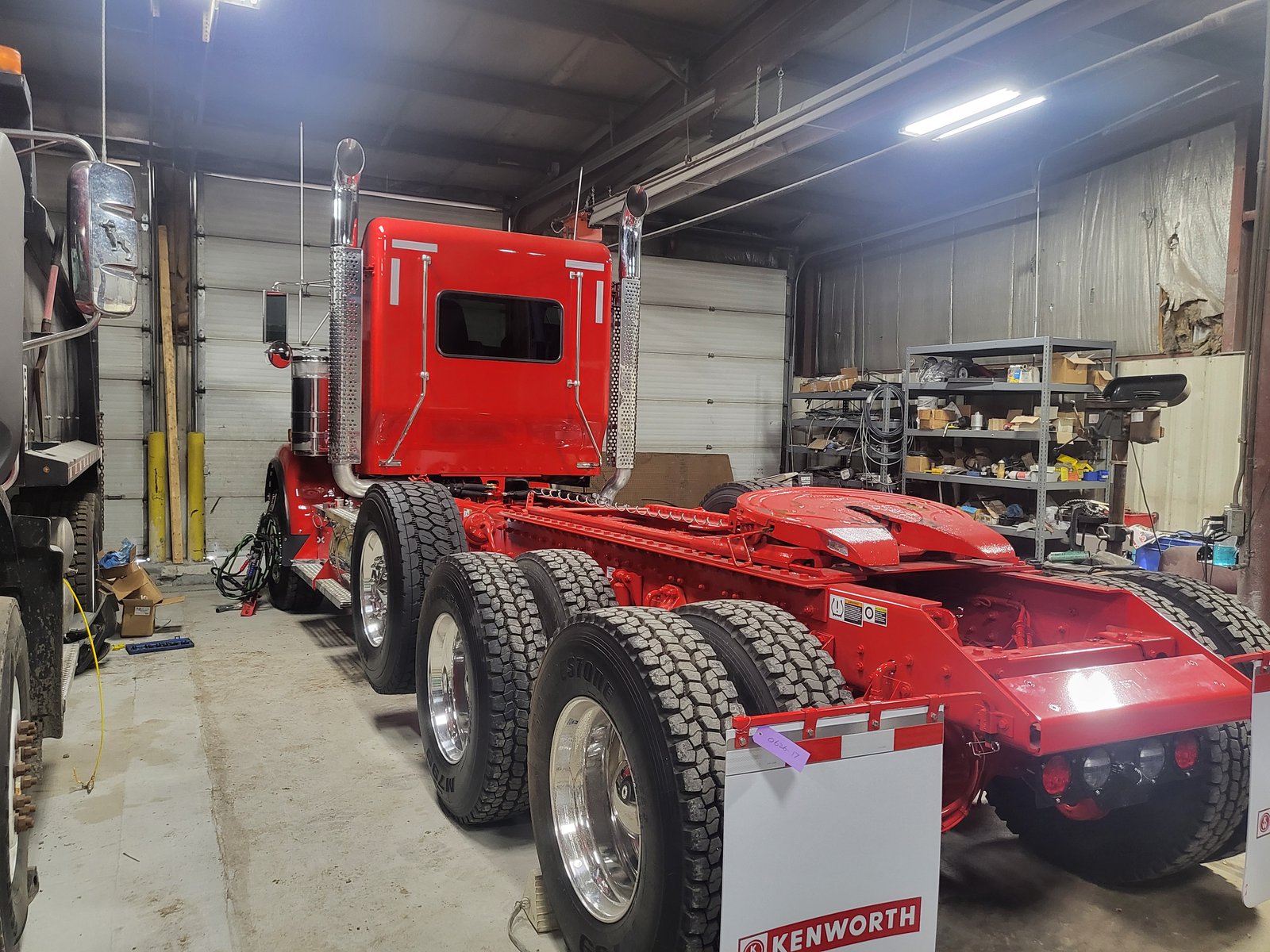
A wet kit for a semi is only as good as how well it’s matched to your truck and the trailer you pull. Too small a pump and your dump or walking floor crawls; the wrong PTO and it won’t fit your transmission; an undersized tank and the oil overheats. Ames Hydraulics specs and builds the right wet kit for a semi from the ground up at 210 Freel Dr in Ames — the correct PTO, pump, tank, valves, and plumbing for the exact work you do. This page is about getting the right kit; if you already know what you want done, see our wet kit installation page.
Speccing the Right Wet Kit for Your Semi
There’s no single semi truck wet kit that fits every truck and trailer. Before we build, we look at your transmission, your truck’s plumbing, and — most important — what you’re pulling. A dump trailer, a walking floor, a live-bottom, a hydraulic detach, and a blower all want different flow and pressure. Getting the wet kit for a semi truck matched to that job is the difference between a system that works hard for years and one that’s a constant headache.
2-Line vs 3-Line Systems
A 2-line wet kit runs pressure and return and covers most straight dump work. A 3-line adds a dedicated return that keeps the oil cooler and is the better choice for continuous-duty jobs like walking floors and live-bottoms. We’ll tell you which your work actually needs instead of selling you more or less than the job calls for.
PTO — Chelsea, Muncie, Hot-Shift or Mechanical
The PTO has to match your transmission and the way you run. We fit Chelsea and Muncie PTOs, hot-shift (air-engaged, shift-on-the-fly) or mechanical, sized to the pump and the load. The wrong PTO is the most common reason a wet kit for a semi disappoints, so we get this right first.
Gear vs Piston Pump
Gear pumps are simpler and cost less — right for most dump and standard hydraulic work. Piston pumps deliver higher, more efficient flow for demanding continuous-duty applications. We match the pump type and displacement to your trailer so you get the speed you need without overworking the system.
Tank Sizing
The reservoir has to hold enough oil to run your system cool. Undersize it and the oil overheats and breaks down; oversize it and you’re hauling dead weight. We size the tank — steel or aluminum, side-mount or frame-mount — to your pump’s flow and your duty cycle.
Built to Your Truck
Every wet kit for a semi we build is fitted to the specific truck: mounting the tank and valves where they clear and stay serviceable, routing hard lines and hose clean, and setting relief pressures for your equipment. Then we pressure-test the whole system before it leaves so you’re not finding leaks on the job. A semi truck wet kit built and tested this way is one you can forget about and just run.
What It Costs
Cost depends on the pieces the job needs — 2-line or 3-line, PTO type, gear or piston pump, tank size, and how your truck is plumbed. Because we spec it to your actual work, you’re not paying for capacity you’ll never use. Tell us your truck and what you pull and we’ll give you a straight quote on the right wet kit for a semi truck.
Free Pickup Within 60 Miles
Bring the truck to our shop in Ames, or we’ll come to you — pickup and delivery are free within 60 miles. Not sure what you need? Text a photo of your truck’s frame and transmission area to 515-292-2599 and tell us the trailer you pull; we’ll spec the right kit and get you a quote.
The Trailer You Pull Decides the Kit
More than anything else, what you haul decides the right wet kit for a semi. A standard end-dump wants moderate flow and a simple 2-line setup. A walking floor runs continuously and needs the cooling of a 3-line system and a bigger tank. A live-bottom, a hydraulic detach, a side-dump, or a pneumatic blower each pull differently again. Tell us the trailer — or the mix of trailers — you run, and we spec the pump flow, PTO, and reservoir around that. Matching the semi truck wet kit to the real work is the whole game.
Do It Once, Do It Right
A wet kit is not the place to cut corners. An undersized or mismatched system overheats oil, burns up pumps, and strands you with a trailer you can’t dump. We’ve fixed plenty of cheap kits that cost their owners more in downtime and replacement parts than a proper build would have in the first place. When we spec a wet kit for a semi truck, every component is matched, mounted to stay serviceable, and pressure-tested before it leaves — so you buy it once and just run it.
Get the Right Wet Kit
New to wet kits? Start with what a wet kit on a semi is. Ready to build one? Call or text 515-292-2599 or stop by 210 Freel Dr in Ames. Once you know the kit you want, we handle the full wet kit installation too. We’re open Monday through Friday, 7AM to 5PM.

Written by Josiah Ragsdale
Owner, Ames Hydraulics — Ames, Iowa
Josiah owns and operates Ames Hydraulics. He has worked on hydraulic and heavy equipment since he was 18, and every hydraulic cylinder his shop rebuilds is pressure tested before it ships back to the customer. More about Josiah →
Got something broken? Call or text 515-292-2599