

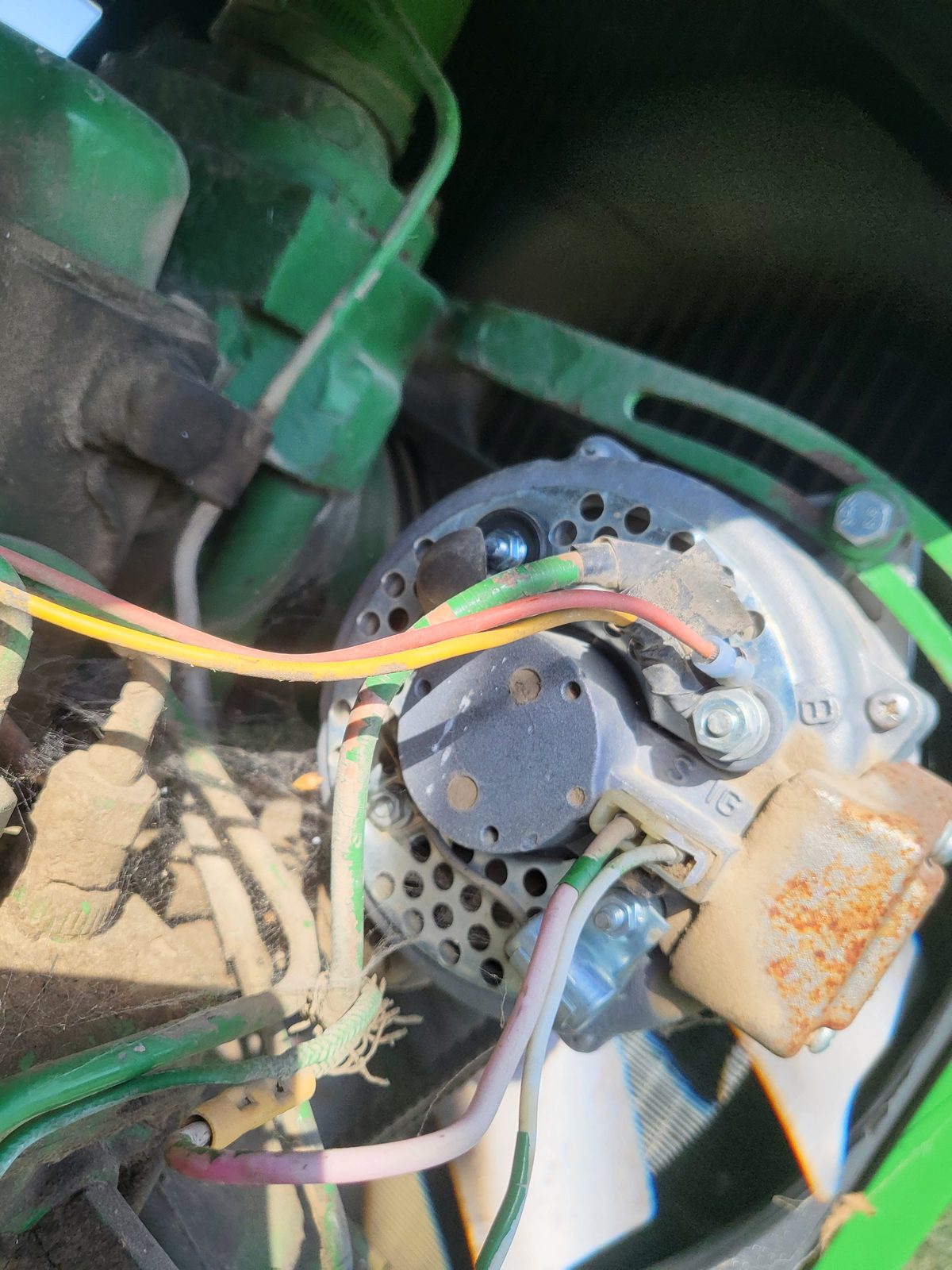
The best thing about antique tractors is the thing nobody says out loud: they’re simple. A Farmall M or a two-cylinder John Deere has an engine you can understand standing next to it — no computer, no sensors, no dealer laptop, just iron, fuel, spark or compression, and honest mechanical logic. That simplicity is why Ames Hydraulics does antique tractor repair and tractor restoration in central Iowa, and why we’re glad to: these are deeply fixable machines, and the skills they need — carburetors, magnetos, mechanical diesels, babbitt-era patience — are exactly what this shop keeps alive.
Repair-First Restoration
There are two kinds of tractor restoration. The show restoration — correct paint codes, correct decals, judged at Old Threshers — is a fine hobby, and the cosmetic side of it isn’t our business. Ours is the other kind: mechanical restoration, where the goal is a tractor that starts, runs, steers, stops, and works — whether it’s pulling a brush hog, driving a parade, or baling ten acres of nostalgia every June. We put the machine right mechanically — engine, fuel, ignition, cooling, clutch, brakes, hydraulics — and leave the paint decisions to you. Plenty of customers do exactly that split: we make it run like 1952, they make it look like it.
What the Old Iron Needs
- Engine work — from stuck-engine revivals (patience, penetrant, and never a cheater bar through the radiator) to full rebuilds on gas and early diesel power
- Magnetos and ignition — magneto repair, coil and points service, and conversions done tastefully when originality matters less than starting
- Carburetors — the dedicated carb bench handles the Marvel-Schebler and Zenith units on nearly everything
- Mechanical diesels — pony-start Cats, early Deere and IH diesels, and their injection systems
- Clutches, transmissions, and final drives — gear work on machines built when gears were the whole transmission
- Cooling systems — radiators, water pumps, and the rust of eighty summers flushed out
- Hydraulics and steering — lift systems, loaders, and power steering; this is a hydraulic shop, after all
- Brakes, wheels, and tinwork — band brakes relined, rims and rubber sorted, and structural tin welded (cosmetic bodywork stays with your painter)
Parts: Better Than You’d Think
The antique tractor parts world is quietly excellent — the common Farmall, John Deere, Ford, Allis, Oliver, and Case models are better supported today than some 1990s machines, with reproduction and NOS suppliers covering most of the catalog. What can’t be bought can usually be made: our machine shop turns the shafts, bushes the bores, and fabricates the brackets that keep an orphan brand alive. That’s the practical difference between a shop doing tractor restoration and a mechanic doing a favor — when the part doesn’t exist, the job here doesn’t stall.
What It Costs and Where to Start
Honest ranges: a get-it-running service on a sound tractor (fuel system, ignition, fluids, adjustment) typically runs $400–$1,200. Stuck-engine revival is quoted after we see how stuck — sometimes it’s a $300 miracle, sometimes it’s a rebuild. Full mechanical tractor restoration — engine through brakes — generally lands $3,000–$8,000 depending on what eighty years did to it, spread over a winter and documented as we go. Every job starts the same way: text photos and the story to 515-292-2599 — what it is, when it last ran, what it did when it quit — and we’ll tell you what the path back looks like. Grandpa’s tractor is exactly the kind of work we take seriously. 210 Freel Dr, Ames — Monday through Friday, 7AM to 5PM.
The Stuck Engine: Iowa’s Most Common Barn Find
Half the antique tractors in Iowa are sitting because of the same sentence: “it’s stuck.” An engine seized from sitting is usually rings rusted to cylinder walls — and the difference between a revival and a destruction is patience. The wrong approach (a loader chain and a big tractor in road gear) breaks ring lands, bends rods, and turns a $500 problem into a parts engine. The right approach takes weeks on purpose: plugs out, cylinders filled with penetrating mix, time allowed to work, then gentle rocking by hand with the head off if needed, and honest inspection of what the rust actually did. We’ve freed engines that sat for forty years and put them back to work — and we’ve also opened engines where water sat on top of a piston and told the owner the truth about what that costs. Either way, the answer comes from method, not force, and a stuck engine is the single most common way a tractor restoration project starts here.
Common Antique Tractor Questions
Should I convert to 12-volt or keep the 6-volt system? A healthy 6-volt system starts these engines fine, and originality has value — but for a tractor that has to work, a clean 12-volt conversion is defensible and reversible. We do both and won’t sneer at either. Magneto or battery ignition — can you fix mags? Yes — magneto repair is a dying skill we’ve deliberately kept. What’s my tractor worth restored? Honestly: usually less than a full cosmetic restoration costs, which is why our repair-first approach makes sense — mechanical soundness holds value; paint is love, not investment. Can you just get it running for a parade? That’s one of our favorite jobs — a get-running service is the gateway drug of tractor restoration, and every June proves it. Text photos of the old iron to 515-292-2599 and we’ll go from there.
Related Services

Written by Josiah Ragsdale
Owner, Ames Hydraulics — Ames, Iowa
Josiah owns and operates Ames Hydraulics. He has worked on hydraulic and heavy equipment since he was 18, and every hydraulic cylinder his shop rebuilds is pressure tested before it ships back to the customer. More about Josiah →
Got something broken? Call or text 515-292-2599